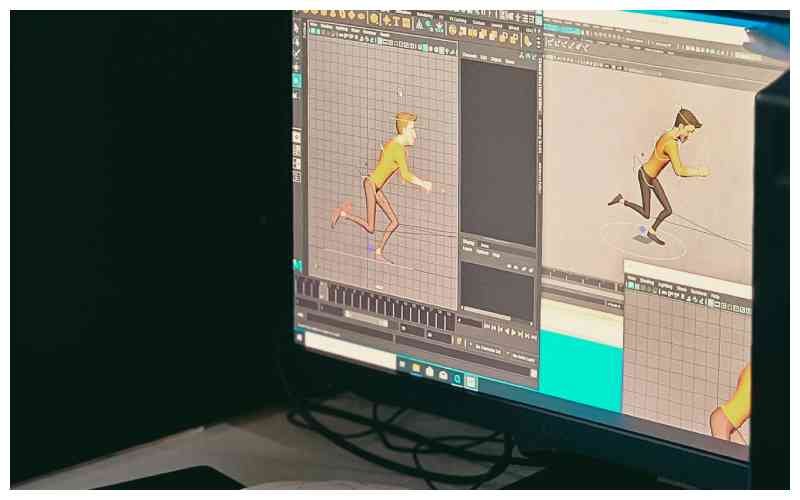
Not long ago, 3D artists packed their bags for Los Angeles, London, or Vancouver. Not anymore. The demand for 3D Artist Jobs Remote keeps growing because studios, agencies, and product companies now hire great people wherever they live. With solid skills and a strong portfolio, your desk at home is a perfectly good place to work.
Why Remote 3D Work Is Growing
Cloud rendering, fast file sharing, and review tools like Slack and Frame.io make distributed production workable. Game studios, VFX houses, architecture firms, and e-commerce brands all need 3D assets, and many would rather hire flexible contractors than build big in-house teams. That’s good news if you want freedom and global pay.
The Software Employers Look For
Whether you’re chasing 3D Artist Jobs Remote in games, film, or visualization, the same tools keep showing up. Pick ones that match your target industry, since games, film, and archviz favor different pipelines.
Modeling, sculpting and animation
Blender: free, powerful, and more and more accepted for modeling, sculpting, and rendering.
Maya: still an industry standard for animation, rigging, and film pipelines.
3ds Max: widely used in archviz and by game and product studios, often paired with V-Ray or Corona.
ZBrush: the go-to for detailed character and creature sculpting.
Houdini: the leader for procedural work and VFX, including simulations and destruction.
Real-time engines
Unreal Engine: essential for AAA games, virtual production, and interactive visualization.
Unity common in mobile, indie, AR/VR, and mid-size studios. Knowing both widens your options.
Texturing, UVs and presentation
Substance 3D Painter: the standard for PBR texturing.
Substance 3D Sampler: turns photos and scans into tile-able materials.
RizomUV: fast UV unwrapping and packing.
Marmoset Toolbag: baking, real-time rendering, and showing off portfolio pieces.
Nobody knows everything. Master one modeling and one texturing tool, learn the engine hand-off, and read listings closely, since studios name their exact software.
Version Control and Hand-off
Newer artists often miss this: remote studios don’t want files emailed. They expect you to work inside source control.
Perforce Helix Core: common in game studios because it copes well with huge binary files, including Unreal projects.
Git and Git LFS: popular with smaller and indie teams. LFS keeps big textures and scenes out of normal history, and platforms like GitHub support it.
Learn to sync, check out, submit, and resolve conflicts, and follow naming rules exactly.
Hardware, Remote Workstations and Internet
Many studios expect your own workstation, so your setup is part of your application.
GPU: an NVIDIA RTX card is the safe pick for V-Ray, Redshift, Cycles, and Unreal ray or path tracing. More VRAM means heavier scenes and bigger textures.
RAM and storage: as a rule of thumb, aim for 32 GB or more and a fast NVMe SSD.
Studio-provided workstations: some studios guard unreleased builds and client IP by giving you remote access through Parsec, Teradici (now part of HP Anyware), or a VDI. Their machine does the heavy lifting, so a steady, low-latency connection matters more than your GPU. Wired Ethernet beats Wi-Fi, and a color-accurate monitor and pen tablet help. Expect security rules: no local asset copies, restricted USB or clipboard access, and a VPN.
Internet and backups: multi-gigabyte source files make upload speed as important as download. Keep a backup connection, like a hotspot, for deadline days, and back up locally and in the cloud.
Listings often state required specs.
Common Roles You Can Apply For
Within 3D Artist Jobs Remote you’ll find environment artists, character artists, props and hard surface modelers, texture artists, lighting artists, technical artists, and 3D generalists. Product visualization and architectural rendering suit freelancers and often pay well with short turnarounds.
Remote 3D Artist Pay: What to Expect
Published numbers don’t agree, so treat these as rough US-client baselines as of September 2026, not promises.
| Level | 7CGI | Freelance Nation |
| Entry-level / junior | about $8 to $15 per hour | about $20 to $35 per hour |
| Mid-level | about $15 to $35 per hour | about $45 to $70 per hour |
| Senior / specialist | about $35 to $70+ per hour | about $75 to $130 per hour |
Why the ranges differ: Freelance Nation’s figures are for US freelancers specifically, while 7CGI points to big regional variation and its lower tiers include artists from lower-cost markets who compete on price through marketplaces. Rush jobs, usage rights, and agency markups raise rates, and US or EU clients with real budgets usually pay more than bulk outsourcing buyers. If you apply from outside the US or EU, check what your target clients actually pay, not just your local rate. Very low bids can look inexperienced, though some clients still weigh location. Pick sustainable rates and earn raises through your portfolio and reliability.
Salaried roles: Glassdoor shows a US median near $80,000 a year, entry-level ranges around $34,000 to $67,000, and top earners above $140,000. Other sites differ, so compare a few. Technical artists and visualization specialists usually earn more than generalists, and many studios adjust remote pay by country. Quote per asset or project when you can, and get revisions and payment terms in writing.
AI and Generative Tools in Remote Pipelines
By 2026, AI will be part of many workflows, but every client has its own rules. Industry write-ups, many from studios and AI vendors, describe a hybrid approach: AI speeds up early stages, and humans own the final result.
Where it’s used: ideation, block-outs and placeholders to test scale in the engine, and texture generation followed by manual cleanup.
Where it struggles: consistent art direction, clean topology and UVs, correct scale, and engine fit. Most studios still want humans to model, texture, and optimize final assets.
Legal and policy: purely AI-generated work may not be copyrightable in the US without significant human authorship, so studios want documented human input. Platforms like Steam require AI disclosure, and some clients restrict or ban AI. Start with what studios can protect and how studios use AI in game art, but neither is legal advice.
How to handle it: read contracts for AI clauses. Disclose AI-assisted steps and keep prompts, references, and working files. Never upload unreleased client assets to public AI tools without written permission. Treat AI as speed, not a replacement for core skills, and label hand-made versus AI-assisted pieces in your portfolio.
Build a Portfolio That Gets Replies
A strong portfolio matters more than anything else when you apply for 3D Artist Jobs Remote. Show your best 5 to 8 pieces in one specialty, like game-ready assets or archviz, so your work looks deliberate. Each piece needs a breakdown:
- Wireframes and topology: clean meshes, with triangle or polygon counts stated.
- Polycount budget: name the target platform, since mobile props, PC and console hero assets, and cinematic models are very different.
- Texture resolution: list map sizes (1K, 2K, or 4K) and the maps you made, such as base color, normal, roughness, metallic, and ambient occlusion.
- Texel density: keep it consistent and say what you targeted.
- Turntables and engine shots: present in Marmoset Toolbag, Unreal, or Unity with neutral and final lighting.
Budgets vary by studio, platform, and asset type, so match your numbers to your target job. Host everything on ArtStation or a personal site, and link it in every application.
Where to Find Openings
As of September 2026, these are the places to hunt for 3D Artist Jobs Remote:
ArtStation Jobs: artist-focused game and VFX listings with job type and experience filters.
LinkedIn Jobs: search for “3D artist,” switch on the Remote filter, and turn on alerts.
Wellfound: startup roles, including game and product studios.
We Work Remotely: a big remote-only board with creative categories.
RemoteOK: remote roles you can search by tags like “3D” or “Blender.”
Arc: a dedicated remote 3D artist category.
Polycount Remote Jobs: community threads for remote game artwork.
Set alerts for “remote,” “contract,” and your software. Networking on ArtStation, Discord, and X can also surface unposted offers. Before applying, confirm the company is real, pay is stated, and nobody asks you for money.
Final Thoughts
Remote work rewards people who communicate clearly, hit deadlines, and send tidy files. Keep sharpening your craft, keep your portfolio fresh, and start applying for 3D Artist Jobs Remote today. Consistency beats perfection.
